Share Price:

APNASPENAspen Pharmacare Hldgs15808-65 (-0.41%)

Aspen is in a closed period from 1st July 2026 until the publication of the annual results on the JSE SENS platform on the 2nd September 2026.

Aspen’s revenue soars by 53% to R29.5 billion

Johannesburg – JSE Limited listed Aspen Pharmacare Holdings Limited (APN), the fifth largest generic company in the world and Africa’s largest pharmaceutical manufacturer, has announced excellent results for the year ended 30 June 2014. GROUP PERFORMANCE Revenue increased by 53% to R29.5 billion. Operating profit rose by 47% to R7.4 billion. Normalised headline earnings, being headline earnings adjusted for specific non-trading items, was up 27% to R4.9 billion. Normalised headline earnings per share advanced 27% to 1064 cents. A capital distribution of 188 cents per ordinary share was declared by way of a capital reduction payable out of contributed tax capital to shareholders. Stephen Saad, Aspen Group Chief Executive said, “The Board is pleased with the Group’s performance, particularly that of the International business which was the most significant growth driver and the largest business segment contributor to revenue and to operating profit.  Accelerated revenue from Latin America bodes well for that region while Asia remains an important growth territory. The South African business continues to retain its position as the leading pharmaceutical company in the private and public sectors of this market, and Sub-Saharan Africa also delivered a pleasing performance.” SIGNIFICANT TRANSACTIONS A number of significant transactions were completed during the financial year and were influential in the performance of the Group.  These transactions have created important new opportunities for Aspen in both product offering and geographic coverage.  The key terms of these transactions are set out below: The acquisition of the active pharmaceutical ingredient (“API”) manufacturing business, primarily in the Netherlands, from MSD for EUR 31 million net of cash acquired, became effective 1 October 2013 and trades as Aspen Oss and Aspen API. The acquisition of a portfolio of 11 branded finished dose form molecules from MSD in a related transaction for USD 600 million, of which USD 67 million is subject to delayed payment terms, became effective on 31 December 2013. The acquisition of the Arixtra and Fraxiparine/Fraxodi thrombolytic brands worldwide (excluding China, India and Pakistan) from GlaxoSmithKline (“GSK”) for GBP 505 million became effective on 31 December 2013. In a connected transaction which became effective on 30 April 2014, a further GBP 194 million was paid to GSK for the acquisition of the specialised sterile production site in France which manufactures these brands and the related inventory. This business trades as Aspen Notre Dame de Bondeville (“Aspen NDB”). The acquisition from Nestlé of certain licence rights to infant nutritional intellectual property, net assets, including a production facility in Mexico, and shares in infant nutritional businesses in several countries in Latin America for a purchase consideration of USD180 million was completed with effect from 28 October 2013. The acquisition from Nestlé of certain rights to intellectual property licenses and net assets of the infant nutritionals business previously conducted by Pfizer in certain southern African territories, including South Africa, was approved by the competition authorities and became effective on 27 January 2014. The purchase consideration for this transaction of USD 43 million was prepaid in the prior financial year. INTERNATIONAL BUSINESS The International business advanced revenue 242% to R12.7 billion and increased operating profit before amortisation, adjusted for specific non-trading items (“EBITA”), 144% to R3.6 billion.  The margin percentage in the International business narrowed as a consequence of lower margin rates in the Aspen Oss business and in the infant nutritional business in Latin America acquired during the year.  The International business gained most from the significant transactions completed during the financial year and contributed 40% of Group gross revenue and 47% of Group EBITA.  Performance was also boosted by organic growth from the pre-existing global brands portfolio. With effect from 1 January 2014 Aspen introduced a specialised sales and marketing team into Europe and the Commonwealth of Independent States (formerly the Soviet Union) (“CIS”) for the first time. Aspen now has a substantial footprint across Europe and the CIS with more than 400 active sales and marketing focused personnel in 18 countries, the majority of whom transferred from GSK in terms of the arrangements under the acquisition of Arixtra and Fraxiparine. Revenue from customers in Europe CIS was over 5 times greater than the prior year at R7.2 billion.  Of this amount, R4.0 billion was derived from sales of finished dose form pharmaceuticals to healthcare providers and the major portion of the balance was from sales of APIs. There was also a strong acceleration of revenue from customers in Latin America where sales climbed 122% to R3.5 billion.  The acquisitions made by the Group accounted for the largest portion of this increase despite some supply issues, supported by good performances in Mexico and Venezuela. In the Rest of the World, sales to customers were up 181% to R1.7 billion influenced by an increased exposure to the US resulting from the acquisitions concluded during the year and by positive progress in the Middle East North Africa territory. Significant activity has been undertaken at the Aspen Oss API manufacturing site and also at the Aspen NDB specialist sterile manufacturing site.  At both of these sites it has been necessary to disentangle the manufacturing operations from the systems of the vendors.  Capital expenditure projects are also ongoing at both these sites.  At Aspen Oss, improvements to the safety profile of the site are receiving urgent attention and at Aspen NDB, additional capacity is being added with the construction of an entirely new production area. On 10 September 2014, Aspen Global Incorporated (“AGI”) entered into an agreement with Mylan Ireland Limited (“Mylan”) in terms of which AGI will dispose of its rights to commercialise the fondaparinux products it recently acquired from GSK (being Arixtra and the authorised generic thereof) in the United States (“US”) to Mylan. AGI will also enter into a supply agreement to supply these fondaparinux products to Mylan on specified terms.  The transaction will complete upon the satisfaction of certain conditions precedent, including regulatory approvals.  Mylan will pay Aspen USD 225 million upon completion of the transaction. An additional USD 75 million will be held in escrow and… Continue reading Aspen’s revenue soars by 53% to R29.5 billion

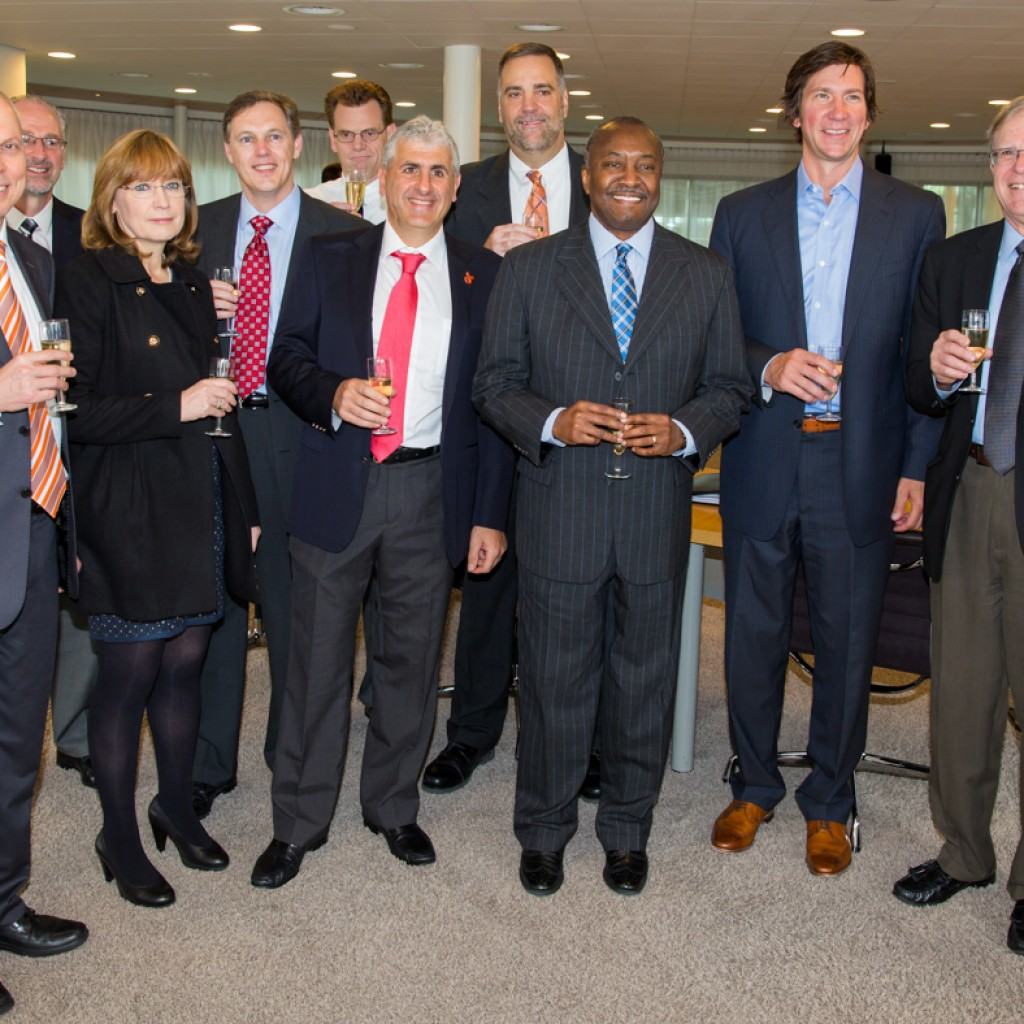
Honorary Doctor of Commerce Degree conferred on Stephen Saad

[vimeo id=”91664323″ align=”center” aspect_ratio=”16:9″] Port Elizabeth – The Nelson Mandela Metropolitan University (NMMU) today conferred the degree of Doctor of Commerce (honoris causa) on Stephen Saad, Aspen Group Co-Founder and Chief Executive.Chancellor of the NMMU, Santie Botha said, ‘’It is an honour for NMMU to confer this honorary degree on Stephen Saad. His vision and drive in the world of business is inspiring and as NMMU we acknowledge the turn-around he orchestrated in a Port Elizabeth-based company that provides jobs to people in an economically struggling province’’.In his address Stephen Saad said, “I am deeply honoured to receive this recognition from the NMMU. What has made the award even more personally meaningful, is that it has been bestowed on me in the same city that Aspen has chosen as the centre of our global operations. Port Elizabeth is the centre of our universe.” “However, in accepting this honour, I do so on behalf of the entire Aspen team, without whom no award would have been possible. I thank the NMMU for recognising our enterprise, drive and courage, but most importantly, our commitment that we in South Africa need not aspire to mediocrity. We have the capability to be a global player in whichever field we choose. It just requires a vision that recognises the realities and which is then executed with both discipline and focus.”Mr Saad paid special tribute to his wife and four daughters, acknowledging them for partnering him and for having driven balance in his life. He also extended his gratitude to his mother and late father, who instilled a competitive but compassionate value system in their family environment.Stephen, who was inducted into the international Ernst & Young World Entrepreneur of the Year Hall of Fame in 2005 and who was recognized as the 2012 Sunday Times Business Man of the Year, said that if he could share one piece of advice it is this: “Try to do something you enjoy, that you can do with pride and which rewards you beyond financial considerations. From a start-up operation with no revenue, Aspen now has a market capitalisation in excess of R120 billion and will have over 70% of its sales from abroad.”“Aspen’s Port Elizabeth-based manufacturing site is the largest operation of its kind in the Southern hemisphere. It is the backbone and the engine room not only of our global operations, but it is also the source for most of the one in four medicines that Aspen provides to both the South African Public and Private sectors. It provides for the health of the nation, meeting the highest global quality standards but doing so affordably. In Port Elizabeth, the United States Food and Drug Administration tentatively approved the first generic anti-retroviral (ARV), which was developed by Aspen, and from these beginnings Aspen has been at the forefront of trying to combat this pandemic on the African continent”, said Saad.

Aspen’s half-year revenue increases to R12 billion

Johannesburg – JSE Limited listed Aspen Pharmacare Holdings Limited (APN), the ninth largest generic company in the world and Africa’s largest pharmaceutical manufacturer, has announced excellent results for the six months ended 31 December 2013. Group Performance Revenue increased by 33% to R12.0 billion. Operating profit improved by 16% to R2.9 billion after absorbing transaction costs of R143 million relating to the significant new business acquisitions undertaken in the reporting period. Normalised headline earnings, being headline earnings adjusted for specific non-trading items, rose 23% to R2.1 billion. Normalised diluted headline earnings per share increased by 23% to 467.4 cents. Stephen Saad, Aspen Group Chief Executive said, “The business delivered pleasing returns with the International business leading the Group’s growth with significant advances in revenue and profits through a combination of organic growth and the contribution of completed acquisitions. This momentum is expected to continue as Aspen further extends its emerging market presence to the Commonwealth of Independent States (“CIS”) comprising Russia and the former Soviet Republics, to Central and Eastern Europe (“CEE”) as well as adding to its existing business in Asia and Latin America.” RECENT TRANSACTIONS Aspen has recently undertaken extensive corporate activity which will transform the Group. The following is the status of the material transactions involved: The acquisition of the Active Pharmaceutical Ingredient (“API”) manufacturing business, primarily in the Netherlands, from MSD for EUR31 million plus the value of inventory, became effective on 1 October 2013. The acquisition of a portfolio of 11 branded finished dose form molecules from MSD in a related transaction for USD600 million, of which USD67 million has delayed payment terms, became effective on 31 December 2013. The acquisition of the Arixtra and Fraxiparine/Fraxodi brands worldwide (excluding China, India and Pakistan) from GSK for GBP505 million became effective on 31 December 2013. In a related transaction, a further GBP100 million and EUR113 million has been paid into escrow in respect of the acquisition of the specialised sterile production site in France which manufactures these brands and the related inventory. This transaction is scheduled to become effective on 30 April 2014. The acquisition of certain licence rights to infant nutritional intellectual property, net assets, including a production facility in Mexico, and shares in infant nutritional businesses in several countries in Latin America from Nestlé for a purchase consideration of USD180 million was completed with effect from 28 October 2013. The acquisition from Nestlé of certain rights to intellectual property licenses and net assets of the infant nutritionals business presently conducted by Pfizer in certain southern African territories, including South Africa, has been approved by the competition authorities and became effective on 27 January 2014. SOUTH AFRICAN BUSINESS In the South African business, revenue improved by 8% to R3.8 billion and operating profit before amortisation, adjusted for specific non-trading items (“EBITA”) was unchanged at almost R1.0 billion. Revenue in the Pharmaceutical division advanced 7% to R3.2 billion. In the private sector, double digit percentage growth in revenue was delivered through a combination of solid organic growth and the contribution from new product launches. Aspen grew ahead of the market in all segments of the private sector. In the public sector, significantly reduced prices for antiretrovirals (“ARVs”) and a reduced share of the ARV tender gave rise to revenue contraction which limited the overall performance of the Pharmaceutical division. The decrease in ARV prices, the continued weakening of the Rand and rising inflation in administered costs caused a reduction in margin percentages despite gains achieved in production efficiency and procurement. The Consumer division raised revenue by 14% which was a positive outcome given the economic pressures at play in the retail sector. The Group continued to invest in capital expansion projects to enhance production capacities and capabilities in South Africa. The two major projects underway are the extension of production facilities at Fine Chemicals Corporation in Cape Town which will allow this site to contribute meaningfully to Aspen’s expanded API activities, and the building of the high containment suite in Port Elizabeth which will further strengthen the Group’s strategic manufacturing capabilities. ASIA PACIFIC BUSINESS The region’s record of unbroken growth since inception in 2001 was extended with a rise of 27% in revenue to R4.3 billion supported by products added as a consequence of acquisitions by the Group in the previous financial year. EBITA was up by 4% to almost R1.0 billion as most of the products added to the portfolio were at the lower margins available for distribution services and the ongoing mandated price cuts in Australia weighed on profits. The margin percentage contraction was cushioned by savings achieved in the cost of goods and through a reduction in rebates paid. In Asia, Aspen’s newly established businesses in the Philippines, Malaysia and Taiwan made impressive advances albeit off a low base. Sales to customers in Asian countries increased by 22% to R311 million. INTERNATIONAL BUSINESS The International business led growth in the Group with revenue increasing 94% to R3.4 billion and EBITA rising 79% to R1.1 billion. The acquisition of the API business from MSD effective 1 October 2013 and the completion of the infant nutritional transaction with Nestlé effective 28 October 2013 together added R1.3 billion to revenue at low margins, boosting the sales growth and lowering overall margin percentages. These deals were also influencing factors in the rise in sales to customers in the Latin American (up 60% to R1.2 billion) and Rest of World (up 147% to R2.2 billion) territories. The global brands portfolio was an important driver of the growth achieved in the International business and the margin improvement projects for these products continued to yield favourable outcomes. Contributions from certain territories in this business have also benefitted from relative currency strength against the Rand. SUB SAHARAN AFRICA BUSINESS In Sub Saharan Africa gross revenue advanced by 41% to R1.4 billion while EBITA climbed 53% to R0.2 billion as the good momentum achieved in the second half of the prior year was maintained. PROSPECTS The completion of the recent transactions… Continue reading Aspen’s half-year revenue increases to R12 billion

Aspen’s growth formula

On a recent holiday to Disney World with his family, Aspen Pharmacare CE Stephen Saad wandered into a pharmacy while his children enjoyed the rides. On a shelf he found Murine Clear Eyes, the eye drops made at Aspen’s Port Elizabeth plant. “About 2m-3m packs a month are sold around the world but it was good seeing them at Disney World [in the US],” says Saad. “On the box it says ‘made in Port Elizabeth’. I wondered how many customers there knew where Port Elizabeth was; they probably thought it was in England.” The anecdote illustrates the global reach of Aspen, which has enjoyed phenomenal growth in just under two decades, from a converted house in Durban to a multinational group. It is now the largest pharmaceutical company in the southern hemisphere and the ninth-largest generics company in the world . But SA remains the heart of its operations. Products made in SA are exported to the rest of Africa, Australia, China and the US. With a 16% share of the SA pharmaceutical market and 31% share of the generics sector, Aspen is ranked the number one pharmaceutical company in SA by IMS Health, a firm that provides research and other services to the health-care industry. Nearly one in four scripts dispensed by pharmacists in SA is for an Aspen product. After buying Sigma Pharmaceuticals for R5,9bn in 2011, Aspen now has a 4% share of the Australian pharmaceutical market and 16% of its generics sector. In Australia, one in seven scripts is for an Aspen product. In Africa, it is the largest pharmaceuticals firm by sales, market share, presence in different countries, turnover, market capitalisation and production, and the biggest supplier of antiretroviral drugs. However, Saad emphasises that Aspen should not be seen as a group that has grown only through acquisitions. “It’s true that we’ve grown through acquisitions, but more of our growth has been organic.” Aspen is attractive as a rand-hedge investment, because 63% of its operating profit comes from outside SA. Plans are in place to enter new territories and expand further. It supplies branded and generic pharmaceuticals to more than 150 countries, has 23 manufacturing facilities at 17 sites on six continents and employs more than 6000 people . This week its share price was around R266,40, slightly lower than it was at the end of 2013. In the past year the share price has risen by 54,2%. Aspen is one of the more expensive shares on the JSE because the price:earnings multiple is 33,81 times. But the forward p:e is 30,54 times, which means investors expect the company, and share price, to continue doing as well as it has historically. It’s also widely held in institutional investor portfolios. And it has the attractions of consistently high growth in profits, which supports share price growth, as well as steady demand for its products, such as treatments for chronic diseases. Behind this group is a remarkable story of humble beginnings in a house converted into an office, at 94 Fourth Ave in Greyville, a middle-class Durban suburb. The group’s impressive international expansion is based on a formula learnt in the early days: to start small and then grow. “Even now, in new countries for us such as Russia, we move in small, start small, often in rented premises, and grow from there. That’s the way we have done it over and over again.” Saad says much of the group’s success is due to the teams he has working for him in SA and the rest of the world. “There’s a basic value system we drive in the business. We give ownership and trust to our people and let them make lots of the decisions. That’s probably the biggest aspect to Aspen’s success.” That may well be, but a large part of the success comes from Saad and his deputy and long-time colleague, Gus Attridge. Their relationship pre dates Aspen. Saad’s first job in 1989 was at a start-up, Quickmed CC, a small medical wholesale business working mainly in black townships around Durban. It later merged with Zurich, which in 1993 was bought by Prempharm (now Adcock Ingram) for R75m. Saad, at the age of 29, made R20m on the deal. Later that year he teamed up with Attridge and they bought a stake in Varsity College, which was struggling at the time. They turned the educational business around, partly through some innovative marketing in which they offered students their money back if they did not pass, as long as they had attended all their lectures. That was an early example of what was to become the hallmark for Aspen deals. “We identify companies that we know we can run better and make money out of. That’s been the motive behind many of our deals,” Saad says. The stake in Varsity College was sold in 1997 to LeisureNet for R100m. Saad and Attridge had paid R1,5m for it. Two LeisureNet executives were later convicted on fraud charges, but that scandal did not touch Saad and Attridge. Attridge says: “We had some concerns about the two LeisureNet directors we were dealing with. But we monitored it closely and the transaction went through fine.” With the money they made on the Varsity College deal they established and launched Aspen later that year. Both attended the same university, the University of Natal, but met only later. “I was at university earlier than Stephen; I’m older than him. I think we met playing club rugby against each other,” Attridge says. What was then called Aspen Healthcare began trading in 1997 and the following year listed on the JSE through a reverse listing into Medhold. But 1999 proved to be the big year for Aspen, when it bought a major pharmaceutical company, SA Druggists (SAD), for R2,4bn in a hostile takeover. “Without a doubt, in retrospect, SAD was the highest-risk deal we did,” Saad says. “We were confident at the time but if it had gone wrong, we would have lost… Continue reading Aspen’s growth formula

Honouring Former President Nelson Mandela

Johannesburg, Friday 6 December 2013 – Today, as the world mourns the passing of one of its most outstanding citizens and South Africa’s former President, Nelson Rolihlahla Mandela, Aspen, joins the millions of people worldwide, in expressing its deepest condolences to the family and friends of this humble leader. Stephen Saad, Aspen Group Chief Executive said, “Although Madiba’s passing will leave a significant void, his decisive leadership, impeccable values and high moral standing will remain with us and we trust it will continue to inspire nations around the world. Aspen continues to draw inspiration from the leadership example set by Madiba. It is an example we have experienced first hand and which has touched the lives of countless fellow South Africans and others across the globe.” In August 2013, Aspen and the Sifiso Nxasana Paediatric Trust donated R5 million towards the establishment of the Nelson Mandela Children’s Hospital, demonstrating ongoing commitment to Mr Mandela’s vision to ensure that future generations of South Africans receive the healthcare that they rightly deserve. Dr Judy Dlamini, Chairman of the Sifiso Nxasana Paediatric Trust said, “At a personal level, Madiba brought back my human dignity and African pride. He will continue to unite the nation through initiatives that will vastly improve specialist paediatric healthcare in the public sector and provide hope to thousands of children.” Upon the inspired advice of Mandela and others, in April 2001 Aspen sponsored the greenfield establishment of the Engcobo Healthcare Centre, near Madiba’s ancestral home in the Eastern Cape. Engcobo, a primary care facility, was established to reduce the burden on surrounding public facilities and soon became a beacon of hope for many in the area who were provided with access to primary care services. At the inauguration of this clinic, Aspen made a commitment to former President Mandela that it would continue its involvement at Engcobo. Aspen has remained true to this commitment and has provided ongoing support to the Engcobo Clinic for the twelve years since. It is not only the people of Engcobo that continue to benefit from this inspired decision, but indeed many hundreds of thousands more. In the early days of anti-retrovirals (ARV’s), it was the hand of Mandela that once again emerged and as with the clinic, was able to provide hope to the most vulnerable in our society. With ARV treatment prices at $35 000 per patient per year and patents of offshore multinational companies strongly protected, this lifesaving medication seemed clearly out of reach for those who needed it most. Many of these patients received their services at Engcobo, but without ARV’s their lives were at risk. Aspen shared footage of the joint Mandela/Aspen inspired clinic with leading multinational pharmaceutical companies to demonstrate the plight of these people. This proved to be a tipping point to some of these multinational companies who agreed to the granting of licenses on their ARV patents to Aspen and to partner with it in making ARVs more accessible to those who needed it. This enabled Aspen to pioneer the manufacture and distribution of generic ARV’s at some $180 per patient per year, a fraction of the $35 000. These meaningful acts accelerated the introduction of generic ARV’s and saved hundreds of thousands of lives. Madiba’s hand in this was both telling and significant. We thank him and honour him for these acts and many more that he carried out in his life. Since 2011, Aspen has also embraced the Mandela International Day celebrated annually on 16 July – an initiative which lies close to the heart of its people around the world. This year Aspen participated in 36 projects in 14 countries on 6 continents which directly enhanced the lives of some 9 400 beneficiaries. The Group’s commitment to making a meaningful difference to others will continue as we remember the call made by Nelson Mandela who said, “We can change the world and make it a better place. It is in your hands to make a difference”. As we pay our final respects to this remarkable man, the best way to honour him is to follow his examples of decisive leadership, impeccable values and high moral standing. Only then will we have made a difference in the lives of others, particularly those who are the most vulnerable in our society.

Aspen concludes the acquisition of an API Business from MSD

01 October 2013 By : Shauneen Beukes 1 October 2013 Oss, the Netherlands – JSE Limited listed Aspen Holdings, the ninth largest generic pharmaceutical company in the world, has announced that the Aspen Group (“Aspen”), has finalised the acquisition of Active Pharmaceutical Ingredient (API) manufacturing operations and related businesses (“the API Business”) from MSD, known as Merck & Co., Inc. in the US and Canada, with effect from 1 October 2013. This forms part of the larger series of transactions with MSD as announced by Aspen on 18 June 2013 – it was confirmed in this announcement that Aspen would acquire the API Business and had reached agreement for an option to purchase a portfolio of 11 branded finished dosage form molecules (“the Products”) from MSD for a total consideration of R10 billion. Stephen Saad, Aspen Group Chief Executive, said “this deal strongly complements Aspen’s strategic intent of globalising its business by providing access to a niche range of APIs and products. It includes the acquisition of an API facility in Oss that manufactures for MSD and the market generally as well as a satellite facility and sales office in the United States.” In terms of the transaction, Aspen will continue to supply APIs to MSD under a 10-year supply contract, which will provide significant on-going volumes for the API Business. Further opportunities also provide for Aspen to develop finished dosage form products from certain of the APIs such as hormones and peptides.

Aspen acquires GSK brands and manufacturing site for £700 million

Durban, South Africa: Aspen Global Incorporated (“AGI”), a wholly owned subsidiary of Aspen, announced today that it will acquire from GlaxoSmithKline plc (“GSK”) the Arixtra and Fraxiparine/Fraxodi brands (“the Brands”) and business worldwide, except in China, Pakistan and India (“the Excluded Territories”) as well as a specialised sterile production site which manufactures the Brands at Notre Dame de Bondeville, France (“the Site”), collectively (“the Proposed Transaction”) for £700 million in cash, of which £100 million relates to inventory. Stephen Saad, Aspen Group Chief Executive, said: “this deal presents excellent synergistic opportunities for Aspen’s ongoing global expansion strategy. In conjunction with the successful completion of an announced transaction with MSD, the opportunity exists to pursue a more vertically integrated supply chain for heparin based products, leading to benefits such as production / inventory planning and economies of scale in procurement. The Brands to be acquired have strong brand equity and established demand in the markets where they have been promoted and provides Aspen with a market presence in some additional 30 countries.” Arixtra and Fraxiparine/Fraxodi are made at a sterile site and the ability to manufacture steriles is globally recognised as a specialist activity resulting in limited possible competition. This is a factor further underlined by the increased complexity of the manufacturing process of Fraxiparine/Fraxodi due to the biological nature of the active pharmaceutical ingredients (“API”) used in their production. David Redfern, Chief Strategy Officer, GSK, said: “Arixtra® and Fraxiparine® are established products that have consistently delivered strong revenues. However, our focus is on delivering an unprecedented late-stage pipeline and preparing for the launch of approved medicines. Aspen is a long-term partner of GSK and will be able to dedicate the resources that these products deserve to take them forward. Importantly, we are pleased to be able to preserve the vast majority of jobs through this agreement.” Subject to regulatory approvals, it is expected that the majority of commercial operations will transfer to Aspen by the end of the year with the remainder, along with the Site, to follow in the first half of 2014. AGI will also be entering into a put/call option agreement in relation to the rights to the Arixtra and Fraxiparine products in the Excluded Territories, with an option period commencing on 1 January 2018 at a price to be determined at the time of exercise.

Aspen’s revenue soars to R19.3 billion

Johannesburg – JSE Limited listed Aspen Pharmacare Holdings Limited (APN), the ninth largest generic company in the world and Africa’s largest pharmaceutical manufacturer, has announced excellent results for the year ended 30 June 2013. Group Performance Revenue from continuing operations increased by 27% to R19.3 billion. Operating profit from continuing operations rose by 28% to R5 billion. Normalised headline earnings, being headline earnings adjusted for specific non-trading items, advanced 32% to R3.8 billion. Normalised diluted headline earnings per share from continuing operations increased by 31% to 836 cents. Total distribution of 157 cents per share comprising a cash dividend of 131 cents per ordinary share and a capital distribution of 26 cents per ordinary share. Stephen Saad, Aspen Group Chief Executive said, “While all business segments recorded substantial growth, the International business excelled with a superb performance driven by a combination of organic and acquisitive revenue growth.. The largest revenue contribution to the Group came from the Asia Pacific business while Latin America was the fastest growing customer geography.” South African Business In the South African business, revenue improved by 20% to R7.4 billion and operating profit before amortisation, adjusted for specific non-trading items (“EBITA”) increased 11% to R2.0 billion. Revenue in the Pharmaceutical division rose 20% to R6.2 billion driven by organic growth and a strong contribution from new product launches in the private sector. In the public sector expanding demand for antiretrovirals (“ARVs”) added to the growth momentum although the greater weighting of revenue from low margin ARVs was the largest factor in the contraction of margin percentages. The weakening of the rand and rising inflation in administered costs also put pressure on margins although this was partially relieved by gains in production efficiency and procurement savings. The Consumer division delivered an 18% increase in revenue with nutritionals being the biggest growth driver. Innovative new products, growing-up-milk and ready-to-feed infant milk were launched expanding Aspen’s offering in the nutritional sector. Capital expansion projects have continued according to plan at all of the South African sites. In Port Elizabeth, land was acquired immediately adjacent to Aspen’s site. Part of this land is already under construction with the commencement of the building of the high containment suite while the remaining land remains available for future projects. The upgrade of packing capabilities is also underway in Port Elizabeth. The expansion and enhancement of manufacturing capabilities is continuing at Fine Chemicals in line with the strategy to achieve greater vertical integration of this site with Group active pharmaceutical ingredient (“API”) demands. The projects underway in East London and at Clayville are nearing completion. Asia Pacific Business The region’s continuous record of growth since the business was established in this territory in 2001 continued with a gain of 26% in revenue to R7.6 billion and with EBITA increasing by 30% to R1.9 billion. Rand-denominated performance was enhanced by the relative strengthening of the local currencies. The Asia Pacific region was the largest contributor to revenue in the Group for the first time, accounting for 37% of total gross revenue. This was achieved despite the mandated price cuts in Australia imposed by existing legislation. Revenue growth was supported by acquired products and pleasing progress in the Asian territories. EBITA advances benefitted from the continuation of the project to source more competitive product costs including the migration of production to the Port Elizabeth site in South Africa. The newly established subsidiary in Malaysia commenced trade in July 2013 and a further subsidiary has been established in Taiwan. Distribution in Australia of the classic brands portfolio acquired by the Group from GlaxoSmithKline (“GSK”) in December 2012 and the infant milk products acquired by the Group from Nestlé in May 2013 have been successfully taken on. International Business The International business showed strong growth with revenue increasing 48% to R3.7 billion and EBITA rising 59% to R1.5 billion. Latin America showed the biggest advance where sales to customers in this territory climbed 53% to R1.6 billion. A combination of organic and acquisitive growth propelled the Latin American performance despite the impact of the currency devaluation in Venezuela. The global brands portfolio was an important contributor to the growth achieved in the International business and the margin improvement projects for these products continued to yield favourable outcomes. Contributions from certain territories in this business have also benefitted from relative currency strength against the rand. Sub-Saharan Africa Business Gross revenue in Sub Saharan Africa increased 26% to R2.1 billion driven by expanded promotional support. The negative growth in EBITA during the first six months was reversed with an increase of 16% in EBITA in the second six months bringing the result for the year to R252 million, an increase of 2%. Impending Transactions Aspen has undertaken extensive corporate activity over the past year and the following transactions are being progression by Group companies: The acquisition of an API manufacturing business, primarily in the Netherlands, from MSD for approximately €36 million plus the value of inventory, to be effective 1 October 2013. Further details appear in the SENS announcement of 27 June 2013. In a related agreement with MSD, Aspen has an option to acquire a portfolio of 11 branded finished dose form molecules covering a diverse range of therapeutic areas for approximately US$600 million. The most likely date for the acquisition of this portfolio through the exercise of the option is 31 December 2013. Further details appear in the SENS announcement of 27 June 2013. A binding, irrevocable offer submitted to GSK to acquire the Arixtra and Fraxiparine/Fraxodi brands worldwide (excluding China, India and Pakistan) together with the specialised sterile production site which manufactures these brands for approximately £700 million. In terms of the offer, the date of acquisition of the brands would be 31 December 2013 and the date of acquisition of the site would be 30 April 2014. Further details appear in the SENS announcements of 18 June 2013 and 24 July 2013. The acquisition of certain licence rights to infant nutritional intellectual property, net assets… Continue reading Aspen’s revenue soars to R19.3 billion

Closed Period

Aspen is in a closed period from 1st January 2026 until the publication of the interim results on the JSE SENS platform on the 3rd March 2026.

The live presentation will take place in Cape Town at 08h30 on 2 March 2023.

Corporate

Our career opportunities are across the corporate spectrum, including Human Capital, Digital Technology, Legal, and Risk & Sustainability. Our employees are given the opportunity to hone their skills and develop the experience of excellence in their chosen field in the pharmaceutical industry.

View our teams below: