Share Price:

APNASPENAspen Pharmacare Hldgs14500-149 (-1.02%)

Aspen is in a closed period from 1st January 2026 until the publication of the interim results on the JSE SENS platform on the 3rd March 2026.

Honouring Ahmed M Kathrada

This morning we wake up to the news, that one of the country’s foremost leaders, a true son of the African soil, Ahmed Mohammed Kathrada, Uncle Kathy, had departed our world. Uncle Kathy, as he was and will continue to be affectionately known to us at Aspen, was one of our country’s key architects of the non-racist, non-sexist and equal society that we aspire to today. The “miracle of South Africa” would not have been possible without the selfless toil of the likes of Uncle Kathy. Although our country has lost a great leader, he leaves us with a defining legacy, that we are compelled to continue building on. In recent years Aspen and the Kathrada Foundation have worked closely on a number of projects and initiatives, all aimed at building a better society and in particular improving the plight of the poorest resourced in our society. It is a partnership that we will continue into the future, making a difference to the lives of many South Africans, who need the hope and assistance that the Foundation provides. As we honour this great South African, a humble and modest man, we at the same time pass on our deepest condolences and profound sympathy to our friend and Kathy’s long-time companion, Barbara Hogan, to the Kathrada family and to the Executive Director of the Foundation and his team, Neeshan Balton. May his soul rest in peace and his legacy forever remain a shining example to all.

Aspen’s half-year revenue increases 13% to R19.8 billion

Johannesburg – JSE Limited listed Aspen Pharmacare Holdings Limited (APN), a leading pharmaceutical company in the southern hemisphere, has announced favourable results for the six months ended 31 December 2016. Stephen Saad, Aspen Group Chief Executive said, “The Group has transformed into a global multinational organisation focused on therapeutic specialties over the past few years. This has been a significant undertaking which has required substantial investment in order to build the necessary infrastructure. The contribution from the anaesthesia portfolio acquired from AstraZeneca with effect from 1 September 2016 boosted performance in a period where there were a number of challenges in the operating environment. Particularly pleasing was the marked improvement in cash generated from operating activities which more than doubled as measures to improve working capital management took effect.” GROUP PERFORMANCE • Revenue increased by 13% to R19.8 billion. • Normalised headline earnings per share rose 6% to 692.0 cents. • Normalised EBITDA rose by 7% to R5,5 billion. • Operating cash flow per share escalated 111% to 708,7 cents. • Headline earnings per share increased 53% to 640,9 cents. In addition to the anaesthetics acquisition, the conclusion of a supply and distribution agreement with a major pharmaceutical company which contributed a further R0.4 billion to revenue from the sale of Hydroxyprogesterone Caproate (HPC) in the USA had a positive impact on performance. These upsides were partially offset by the following factors: • The anticipated decline in the South African business which is nonetheless well on its path to recovery; • Margin pressure in the Latin American nutritional business due to reduced production activity as surplus inventories arising from Aspen’s withdrawal from Venezuela were redeployed; • Legislated price decreases, GBP weakness following the Brexit vote, supply constraints and adjustments to the distribution model weighing on performance in the Europe CIS territory; and • Foreign exchange losses, primarily arising from the Rand strengthening against forward exchange contracts. INTERNATIONAL BUSINESS The International business remained the largest segment of the Group, contributing 50% to revenue from customers. Sales to customers in this business increased 11% to R10.0 billion. The Europe CIS territory was the biggest contributor to the International business, increasing sales to customers by 2% to R6.7 billion. Sales of finished dose form pharmaceutical products to healthcare providers (“commercial pharma”) in this territory were up 9% to R4.5 billion. This performance benefitted from the inclusion of the AZ anaesthetics with the offsetting factors mentioned earlier tempering growth achieved. In Latin America, revenue from customers increased 11% to R2.0 billion and commercial pharma sales were 26% higher at R1.3 billion. Excluding the AZ anaesthetics, the underlying pharmaceutical portfolio increased sales 4% to R1.0 billion. Revenue from nutritionals grew in local currencies, but the weakness of the Mexican Peso, in particular, caused reported revenue to decline 9% to R0.7 billion. Margins were unfavorably affected by lower volumes of production in the Vallejo manufacturing site in Mexico for the reasons reported earlier. In the USA, the arrangements with the initially appointed distributor for HPC were terminated and a supply and distribution agreement was signed with a major pharmaceutical company which acquired R0.4 billion of product. Future sales of HPC in the USA will be dependent on the success of this distributor in placing the product in the trade. It is unlikely that there will be further material sales of HPC by Aspen during the 2017 calendar year. Capital projects to enhance production efficiency and ensure highest technical support levels continue at the Notre Dame de Bondeville site in France. At the Oss active pharmaceutical ingredient site in the Netherlands, new capacity is being added and investment in the sustainability of the site is ongoing. SUB-SAHARAN BUSINESS In light of the cancellation of the collaboration with GSK in SSA outside of South Africa, the business segment previously referred to as SSA has been combined with South Africa under the heading of the SSA business. Sales to customers in SSA declined 1% to R4.6 billion. Nutritionals revenue grew 9% to R0.5 billion and manufacturing revenue improved 34% to R0.7 billion. However, as previously communicated, commercial pharma remained under pressure as the resolution of supply chain issues continued, causing sales to decline 8% to R3.4 billion. Despite a month-long strike at the Port Elizabeth and East London manufacturing sites in August, significant progress has been achieved in overcoming the supply constraints affecting the commercial pharma division which delivered improved results in the latter months of the period. The building of a second sterile facility in Port Elizabeth is underway, creating new opportunities to bring additional production to this site. ASIA PACIFIC BUSINESS Sales to customers in the Asia Pacific business increased 36% to R5.2 billion. This region benefits most from the AZ anaesthetics which added R1.6 billion to the sales achieved. In Australasia sales from the base pharmaceutical portfolio grew 3% to R2.3 billion. Sales of nutritionals were 23% lower at R0.4 billion and margin percentages came under pressure. The Australian nutritional industry continues to adapt to lower demand following the withdrawal of informal traders barred from importing product into China. In Asia, the business has expanded substantially with the addition of the AZ anaesthetics. Trade has commenced in China where R0.6 billion of anaesthetic sales was achieved in the period. The underlying commercial pharma portfolio in Asia advanced revenue 17% to R0.9 billion. PROSPECTS In transforming Aspen into a global multinational organisation, it has been necessary to build infrastructure, establish new supply sources and transition management of product portfolios across the world. There have been resultant inefficiencies in overhead structures and working capital management which continue to receive high levels of focus. Unfavourable currency movements and legislated price cuts have also placed pressure on performance. Consequently, this will dilute the synergies realised from various projects. Results in the second half of the 2017 financial year will be influenced by the strengthening of the Rand which, if sustained, will dilute foreign earnings which comprise the greatest portion of Aspen’s income. The outlook to 30 June 2017 will… Continue reading Aspen’s half-year revenue increases 13% to R19.8 billion

Stephen Saad receives the coveted CNBC Africa Entrepreneur of the Year Award

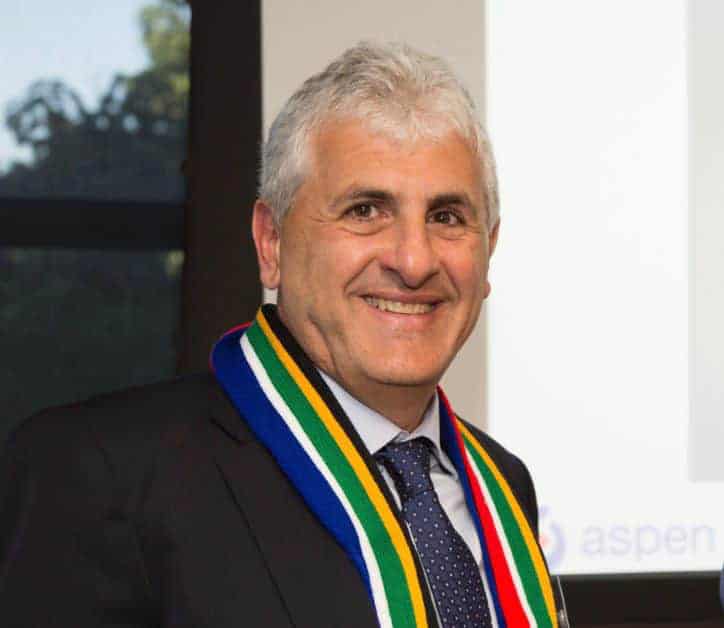
Stephen Saad’s acceptance speech for the Entrepreneur of the Year Award at AABLA.

Stephen Saad scoops Entrepreneur of the Year Award

Johannesburg. Stephen Saad, Aspen Group Chief Executive, was announced as the winner of the Entrepreneur of the Year Award at the All Africa Business Leaders Awards (AABLA) gala banquet in Johannesburg. At the Awards, hosted in partnership with CNBC Africa, Stephen Saad said, “You work at something and you build something together with the team and seldom have time to look back. To be recognized for it in this way is wonderful and particularly so for Aspen. We are a company with roots in South Africa and manufacturing in South Africa. We’ve grown our local talent to become a world player and Aspen is just a wonderful South African story.” Saad said that the biggest challenges faced, besides business basics, was breaking into a generics market and making really big investments around quality and investment. “Aspen competes with multinationals – we started a domestic company and have gone offshore to become a global company manufacturing in South Africa for domestic and export markets,” added Mr Saad. “Going forward we will continue to look for strategic partners. We have completed a number of significant transactions and Aspen has built a really strong foundation now. Our aspiration in the short term is to build on that base and to double our size.” The AABLA, Africa’s most respected business awards, honours remarkable leadership and salutes game changers of business on the continent for their continuing commitment to excellence, developing best practices and innovative strategies.  

Aspen’s comparable revenue increases by 12% to R35.4 billion

Aspen’s comparable revenue increases by 12% to R35.4 billion Johannesburg – JSE Limited listed Aspen Pharmacare Holdings Limited (APN), a leading pharmaceutical company in the southern hemisphere, has announced positive results for the year ended 30 June 2016 notwithstanding economic pressures and currency weaknesses.   Stephen Saad, Aspen Group Chief Executive said, “The positive results underpin the strong foundation set which the business will build on in the 2017 financial year. The recent transactions, with a focus on anaesthetics which has been identified as a key therapeutic category for the Group’s strategic development plans, will further strengthen Aspen’s presence in the hospital sector. The International business remained the largest contributor to Group revenue and delivered strong comparable revenue growth. Manufacturing revenue from South Africa’s Active Pharmaceutical Ingredients (“APIs”) and finished dose forms showed pleasing growth of 52% and 69% respectively. Asia Pacific recorded a 11% comparable revenue increase to R7,4 billion, with Japan leading Asia’s 29% increase in sales. Gross revenue in sub-Saharan Africa increased 18% to R3,3 billion.”   GROUP PERFORMANCE Comparable revenue increased by 12% to R35.4 billion. Comparable normalised operating profit before amortisation, adjusted for specific non-trading items improved by 9% to R9.4 billion. Comparable normalised headline earnings per share rose 15% to 1222 cents. A dividend of 248 cents per ordinary share was declared.   As reported in the interim results, the factors set out below have significantly affected comparability with the results of the prior year and need to be considered when assessing performance for the 2016 financial year: The completion on 31 August 2015 of the divestment of the generics business conducted in Australia as well as certain branded products distributed in Australia to Strides group companies, the related termination of license arrangements in Australia and the completion on 1 October 2015 of the divestment of a portfolio of products distributed in South Africa to Litha Pharma (collectively “the Divestments”). The Divestments gave rise to a pre-tax profit on disposal of R1,6 billion. However, as a consequence of the timing of these transactions, the contribution to the trading results by the Divestments is substantially reduced in the 2016 financial year. In the period from 1 July 2015 until the effective date of divestment, revenue from the Divestments was R0,2 billion whereas revenue from the Divestments for the year ended 30 June 2015 was R1,8 billion.   The economic situation in Venezuela deteriorated over the year to 30 June 2016 and the Venezuelan authorities have increasingly limited authorisations to pay for pharmaceutical imports using the official DIPRO rate during this period of between Venezuelan Bolivar (“VEF”) 6,30 and 10,00 per US Dollar (“USD”). As a consequence of the limited payment approvals and the uncertain economic and political situation in Venezuela, before reporting the interim results for the 6 months ended 31 December 2015 , the Group concluded that it would be more appropriate to apply the DICOM exchange rate (VEF628.34 per USD at 30 June 2016) to report the Venezuelan business’ financial position, results of its operations and cash flows for the year ended 30 June 2016. This has resulted in a one-off currency devaluation loss on foreign denominated liabilities of R870 million.   The profit arising from the Divestments, the currency devaluation loss and the hyperinflationary adjustments relating to Venezuela are excluded, in addition to other specific non-trading items, in determining normalised performance. In order to provide meaningful comparability of the financial performance of the ongoing underlying business, a comparable measure has been determined by removing the contribution from the Divestments and including the results of Aspen’s business in Venezuela translated at VEF628.34 per USD in the prior reporting period.   The key performance measures for the Group for the year ended 30 June 2016 and the percentage change from the prior year are summarized as follows:     Revenue   Operating profit before amortisation   HEPS**   Comparable normalised*** R35,4 billion +12% R9,4 billion* +9% 1 222,0 cents +15% Normalised R35.6 billion -2% R9,5 billion* +3% 1 263,7 cents +10% Unadjusted R35,6 billion -2% R9,6 billion +7% 889.0 cents -23% * operating profit before amortisation, adjusted for specific non-trading items ** headline earnings per share *** The comparable information has been derived from the reviewed financial information and has not been reported on by Aspen’s auditors. This information has been prepared for illustrative purposes only and is the responsibility of the Board of Directors of Aspen   INTERNATIONAL BUSINESS The International Business increased comparable revenue 19% to R18,9 billion and grew comparable operating profit before amortisation, adjusted for specific non-trading items (“EBITA”), 15% to R5,9 billion.   Commercial revenue from pharmaceutical product sales to health care providers in Europe and the Commonwealth of Independent States (“Europe CIS”) improved 22% to R8,5 billion. The acquisition of Mono-Embolex, a thrombolytic product with almost all of its sales in Germany, in the second half of the previous year further strengthened Aspen’s portfolio in this therapeutic area.   In Latin America (excluding Venezuela), revenue to customers increased 3% to R3,5 billion. Nutritional sales were the growth driver, increasing 18% and Infacare was successfully launched in Mexico, securing an important government tender. Aspen has suspended trade in Venezuela pending an improvement in the economic conditions.   Sales to customers in the North America and the Middle East North Africa territories increased strongly off relatively low bases, growing by 42% and 51% respectively.   Manufacturing revenue continued to advance with particularly strong growth in active pharmaceutical ingredient (“API”) sales of 19% to R4,0 billion.   The installation of a new high speed pre-filled syringe filling line at Aspen Notre Dame de Bondeville was completed during the period and commercial production is underway. At Aspen Oss the capital expenditure projects include adding new production capabilities and maintaining the sustainability of the site.   SOUTH AFRICAN BUSINESS Comparable revenue in South Africa was down 1% at R8,1 billion. Nutritionals products maintained their growth momentum, adding 11% to revenue and there were impressive increases in manufacturing revenue for both APIs (+52%)… Continue reading Aspen’s comparable revenue increases by 12% to R35.4 billion

Aspen AstraZeneca Anaesthetics Portfolio Agreement

Aspen Holdings is pleased to announce that its wholly owned subsidiary, Aspen Global Incorporated (“AGI”), has signed an agreement with AstraZeneca AB and AstraZeneca UK (“AstraZeneca”) whereby AGI will acquire the exclusive rights to commercialise AstraZeneca’s global (excluding the USA) anaesthetics portfolio (“the Transaction”). AstraZeneca’s anaesthetics portfolio comprises seven established medicines, namely Diprivan (general anaesthesia), EMLA (topical anaesthetic) and five local anaesthetics (Xylocaine/Xylocard/Xyloproct, Marcaine, Naropin, Carbocaine and Citanest) (“the Portfolio”). The products in the Portfolio are sold in more than one hundred countries worldwide including China, Japan, Australia and Brazil. These products generated revenue of US$ 592 million in the year ended 31 December 2015. The Transaction In terms of the concluded agreement, as consideration for the commercialisation rights, AGI will pay US$520 million and double-digit percentage royalties on sales of the Portfolio. Additionally AGI will make sales related payments of up to US$250 million based on sales in the 24 months following completion. AGI and AstraZeneca have also signed a supply agreement whereby AstraZeneca will supply the anaesthetic products to AGI. This supply agreement has an initial period of 10 years. The commercial activities will transition to AGI in the short to medium term in accordance with an agreed plan. During the transition period AstraZeneca will continue to provide certain commercialisation services to AGI. Based on the terms of the agreements and Aspen’s current cost of funding, Aspen’s interest in the Portfolio would have generated a contribution to profit before tax of approximately US$100 million in the year ended 31 December 2015. Funding AGI’s upfront investment will be funded from new debt facilities which have been secured. Rationale A key element of AGI’s inorganic expansion strategy is to acquire products within therapeutic areas that are both niche in nature and complementary to its existing operations. To this end, AGI has identified anaesthetics as a therapeutic category that presents the opportunity to add significant value to the Aspen Group. As a category of pharmaceuticals that primarily involves sterile manufacturing and that is dispensed largely in hospitals and clinics, anaesthetics present an opportunity to leverage both Aspen’s existing hospital focused sales force that is currently promoting anti-coagulants and, potentially in due course, sterile manufacturing capabilities. Furthermore, the key territories in which the Portfolio is sold represent an excellent fit with Aspen’s existing operational geographic footprint and those markets on which its future strategy is focussed. By entering into the Transaction, Aspen gains immediate access not only to a global portfolio of exceptionally strong brands but also to the scientific and strategic expertise of AstraZeneca, one of the world’s major pharmaceutical companies and a leader in the area of anaesthetics. Completion The transaction is subject to customary closing conditions and is anticipated to complete during the first quarter of Aspen’s 2017 financial year. Categorisation of the Transaction The Transaction is categorised as a Category 2 transaction in terms of the JSE Limited Listings Requirements. Durban, 9 June 2016 Sponsor: Investec Bank Limited                                                                                                About AstraZeneca’s anaesthetics portfolio Carbocaine (mepivacaine) Local Anaesthesia solution for injection for the following techniques: local infiltration, minor and major nerve blocks, epidural block and arthroscopy. Citanest (prilocaine) Local Anaesthesia solution for injection for the following techniques: local infiltration, minor and major nerve blocks, Epidural block, arthroscopy and intravenous regional anaesthesia. Diprivan (propofol) Short acting intravenous sedative / anaesthetic for the following: induction / maintenance of general anaesthesia, sedation of ventilated ICU patients and conscious sedation for surgical / diagnostic procedures. EMLA (lidocaine + prilocaine) Topical Anaesthetic 1g Cream/single patch contains a eutectic mix of 25mg of each of two local anaesthetics (lidocaine & prilocaine), for the following: Cream Anaesthesia of skin for needle insertion, superficial surgical procedures, genital mucosa (eg, prior to superficial surgical procedures or infiltration), leg ulcers, to facilitate mechanical cleansing/debridement Patch Anaesthesia of intact skin in connection with minor procedures, such as needle insertion and surgical treatment of localized lesions Marcaine (bupivacaine) Local Anaesthesia solution for injection for the following: local anaesthesia including infiltration, minor and major nerve blocks, epidural block and arthroscopy. Naropin (ropivacaine) Local anaesthesia solution for injection for the following: Surgical anaesthesia epidural block for surgery, including caesarean section, intrathecal, major nerve block and field block Acute pain management: continuous epidural infusion or intermittent bolus, field block, intra-articular injection, continuous peripheral nerve block infusion or intermittent injections Acute pain management in paediatrics for peri-and postoperative pain; caudal epidural block, peripheral nerve block Xylocaine (lidocaine / lignocaine) Local Anaesthesia solution for injection for the following: local infiltration, minor and major nerve blocks, epidural block, arthroscopy, intravenous regional anaesthesia and topical anaesthesia. About Aspen Aspen is a leading global player in specialty and generic pharmaceuticals with an extensive basket of products that provide treatment for a broad spectrum of acute and chronic conditions experienced through all stages of life. Aspen continues to increase the number of lives benefitting from its products, reaching more than 150 countries. Aspen has a strong presence in both emerging and developed countries. Its emerging market footprint includes Sub-Saharan Africa (where it is the largest pharmaceutical company), Latin America, South East Asia, Eastern Europe and the Commonwealth of Independent States, comprising Russia and the former Soviet Republics. From a developed world perspective Aspen is one of the leading pharmaceutical companies in Australia and has a growing presence in other developed countries, most notably in Western Europe. Aspen operates with an established business presence in approximately 50 countries spanning 6 continents and employs more than 10,000 people. The Group operates 26 manufacturing facilities across 18 sites. Aspen holds international manufacturing approvals from some of the most stringent global regulatory agencies including the FDA, TGA and EMA. Aspen’s manufacturing capabilities are scalable to demand and cover a wide variety of product-types including oral solid dose, liquids, semi-solids, steriles, biologicals, APIs and INs. Aspen, with a market capitalisation of approximately $10 billion, is the largest pharmaceutical company listed on the JSE Limited (share code: APN) and ranks amongst the top 20 listed companies on this exchange. About AstraZeneca AstraZeneca is a global,… Continue reading Aspen AstraZeneca Anaesthetics Portfolio Agreement

Aspen demonstrates economic growth and specialized technologies contributions to Deputy President Cyril Ramaphosa

Port Elizabeth. JSE-listed Aspen, the largest pharmaceutical manufacturer in the southern hemisphere, earlier today hosted Deputy President Cyril Ramaphosa and Minister of Health Dr Aaron Motsoaledi at its Port Elizabeth-based flagship manufacturing site. The visit provided an opportunity to discuss Aspen’s economic growth and export contributions to South Africa, and to demonstrate its globally recognised specialized manufacturing technologies. Aspen is the leading supplier of medicines to the South African public and private sectors, with approximately 1 in 4 medicines dispensed in the public sector being an Aspen product. Stavros Nicolaou, Aspen Senior Executive, Strategic Trade said, “The visit further strengthens the collaboration between Government and Aspen, ‎and provides additional impetus to jointly finding homegrown solutions to the challenges that face South Africa’s economic and healthcare system. This collaboration also dispels some myths that Government and the private sector are at odds with one another.” “Aspen has significantly ‎expanded its global footprint. It has an active presence in 76 countries and distributes product to more than 150 countries. This expansion has been mirrored by our ongoing investment in local manufacture which in the past 18 months has exceeded R2 billion, and which continues to contribute to economic growth and export prospects. Our more recent developments include a High Containment Suite to produce high potency and oncological products, and a second Small Volume Parental facility with highly specialised, pre-filled syringe capability for niche low molecular weight heparin injectables for domestic and offshore markets. We also produce the unique MDR-TB injection, Capreomycin (Capstat)® as well as more than 40 million units of Murine® eye drops, the USA’s second largest over the counter eyed drop brand.” In his capacity as the Chairperson of the South African National AIDS Council (SANAC), Deputy President Ramaphosa said, “I salute Aspen for having the foresight to build these plants here in Port Elizabeth, therefore creating valuable high tech jobs. It allows us as Government to purchase medicines that Aspen produces at affordable prices.” Nicolaou added that Aspen’s latest capex spend positions it as a global leader in a number of niche therapeutic areas, such as injectable anti-coagulants (thrombotics), infant nutrition and male and female hormonal health. This investment has further enabled it to re-locate off shore manufacture back into South Africa, which provides for significant export opportunities. “Aspen has ambitious global plans in selected niche, specialist therapeutic areas. These plans are consistent with and aligned to Government’s industrialisation plans. We remain committed to an ongoing contribution to diversify South Africa’s economy, unlock local investments, further establish economic linkages with SME’s, provide job and export opportunities and contribute to the overall challenge of tackling the stubborn inclusive growth challenge we face. Aspen is proof that technology-driven companies will continue to significantly contribute to South Africa’s economic growth,” said Nicolaou. Present at the visit was CEO of Proudly SA, Advocate Leslie Sedibe, who said, “Aspen’s investment in local manufacture and its state of the art facility is a clear demonstration of SA’s global competitiveness in support of DTI’s call to strengthen SA’s industrialization programme through the support for local products. Proudly SA supports Aspen’s achievements in this regard.” While Aspen has 28 manufacturing facilities at 8 sites around the world, South Africa remains the Group’s preferred manufacturing destination, proving that this country’s pharmaceutical manufacture can compete with among the best in the world. Aspen employs over 3000 people in the Eastern Cape across its PE and East London sites.

Aspen’s profit after tax increases by 35%

Aspen’s profit after tax increases by 35% Johannesburg – JSE Limited listed Aspen Pharmacare Holdings Limited (APN), a leading pharmaceutical manufacturer in the southern hemisphere, has announced pleasing results for the six months ended 31 December 2015. The Group delivered solid growth in a period marked by economic stress and weakening market currencies. The factors set out below have significantly affected the comparability of the results with those of the prior period: The completion on 31 August 2015 of the divestment of the generics business conducted in Australia as well as certain branded products distributed in Australia to Strides group companies, the related termination of license arrangements in Australia and the completion on 1 October 2015 of the divestment of a portfolio of products distributed in South Africa to Litha Pharma (collectively “the Divestments”). The Divestments gave rise to a pre-tax profit on disposal of R1.7 billion. However, as a consequence of the timing of these transactions, the contribution to the trading results by the Divestments is substantially reduced in the current period. In the period from 1 July 2015 until the effective date of divestment, revenue from the Divestments was R202 million whereas revenue from the Divestments for the six months ended 31 December 2014 was R1 148 million. The economic situation in Venezuela deteriorated over the 6 months to December 2015 and the Venezuelan authorities have increasingly limited authorisations to pay for pharmaceutical imports using the official CENCOEX rate during this period of Venezuelan Bolivars (“VEF”) 6.30 per US Dollar (“USD”). As a consequence of the limited payment approvals and the uncertain economic and political situation in Venezuela, the Group has concluded that it would be more appropriate to apply the SIMADI exchange rate of VEF 200 per USD to report the Venezuelan business’ financial position, results of its operations and cash flows for the 6 months ended 31 December 2015. This has resulted in a one-off currency devaluation loss on foreign denominated liabilities of R841million. The profit arising from the Divestments, the currency devaluation loss and the hyperinflationary adjustments relating to Venezuela are excluded in determining normalised headline earnings per share (“NHEPS”) which increased by 14%. In order to provide meaningful comparability of the financial performance of the ongoing underlying business, a measure described as comparable NHEPS has been determined by removing the contribution by the Divestments from NHEPS and including the results of Aspen’s business in Venezuela translated at VEF 200 per USD in the prior reporting period. Comparable NHEPS for the 6 months ended 31 December 2015 was 640,9 cents, an increase of 21%. Applying the same principles, comparable revenue increased by 8% and comparable operating profit increased by 8%. GROUP PERFORMANCE Revenue excluding the effect of the Divestments, increased by 8% to R 17.3 billion. Profit after tax increased 35% to R3.3 billion. Comparable normalised headline earnings per share increased by 21% to 640,9 cents. Normalised headline earnings per share improved by 14% to 655.5 cents. Borrowings, net of cash, increased R3.5 billion over the period to R33.5 billion. Group operating cash flows were negatively affected by a R1.8 billion increase in working capital over the period. Stephen Saad, Aspen Group Chief Executive said, “Performance was led by the International business where the Europe CIS region made a strong contribution. The nutritional products in South Africa and in Asia Pacific also achieved good growth. The completion of the Divestments marks an important step in achieving increased focus in the South African and Asia Pacific businesses. Further meaningful advances in the implementation of Aspen’s strategic objectives have been made and we are seeking to grow the business in targeted therapeutic categories. We remain alert to opportunities to expand our product portfolio in these areas of focus.” INTERNATIONAL BUSINESS The International Business improved revenue 2% to R9.0 billion and raised operating profit before amortisation, adjusted for specific non-trading items (“EBITA”), 16% to R2.8 billion. Revenue was unfavourably affected by R836 million due to the devaluation of the Venezuelan contribution. Excluding the effect of the devaluation, revenue increased 14% in the remainder of the International business. Revenue from customers in Europe and the Commonwealth of Independent States (“Europe CIS”) increased 21% to R6.1 billion. Finished dose form pharmaceutical sales to healthcare providers were up 20% to R4.1 billion. The acquisition of Mono-Embolex, with almost all of its sales in Germany, in the second half of the previous year further strengthened Aspen’s offering in this therapeutic area and added to growth. However, the contribution from Russia fell sharply due to the significant weakening of the Ruble. API sales continued to grow and were the largest part of the balance of the revenue from Europe CIS. Sales to customers in Latin America (excluding Venezuela) declined by 1% to R1.7 billion, unfavourably influenced by difficult socio-economic conditions in Brazil. The nutritionals products in the region maintained their positive growth momentum with revenue rising 12%. Demand for Aspen’s pharmaceutical products was strong, but performance has continued to be suppressed by unreliable supply of certain key products by contract manufacturers. The devalued contribution from Venezuela is no longer material to the Group.| Sales to customers in the Rest of the World increased 4% to R922 million, led by a positive performance in the Middle East North Africa territory. The installation of a new high-speed pre-filled syringe filling line at Aspen Notre Dame de Bondeville (“Aspen NDB”) was completed during the period and commercial production is about to commence. At Aspen Oss capital expenditure projects are ongoing, focused on the sustainability of the site. SOUTH AFRICAN BUSINESS In the South African business revenue was 3% lower at R4.2 billion. Excluding the effect of the Divestments, revenue improved by 4%. The nutritionals products were the leading performer, with revenue growing 15% to R402 million. In the balance of the private sector, branded and generic pharmaceuticals performed satisfactorily. However, supply problems severely undermined the performance of the over-the-counter (“OTC”) products with a consequential decline in key OTC brands. Sales in the public sector (excluding… Continue reading Aspen’s profit after tax increases by 35%

Closed Period

Aspen is in a closed period from 1st January 2026 until the publication of the interim results on the JSE SENS platform on the 3rd March 2026.

The live presentation will take place in Cape Town at 08h30 on 2 March 2023.

Corporate

Our career opportunities are across the corporate spectrum, including Human Capital, Digital Technology, Legal, and Risk & Sustainability. Our employees are given the opportunity to hone their skills and develop the experience of excellence in their chosen field in the pharmaceutical industry.

View our teams below: